Milan has one of the most competitive pizza scenes in Italy. In this context, Modus has carved out a precise niche: authentic Cilento-style pizza, made with ingredients sourced from controlled supply chains within the Cilento National Park and long-fermentation doughs. It is a pizza with its own history and geography.
What is meant by Cilento-style pizza?
Cilento-style pizza is a choice of ingredients and supply chain. It shares the long-fermentation dough technique, high-temperature baking, and respect for fermentation times with the Neapolitan tradition. The difference lies in the raw materials: for the "old-fashioned" style, stone-ground whole wheat flour from native Cilento grains; for the toppings, typical Cilento products such as Menaica anchovies (a Slow Food Presidium), mozzarella nella mortella (mozzarella wrapped in myrtle), and artisanal preserves.
The Cilento is a territory with an ancient agricultural tradition protected by the National Park: its native grains are cultivated by the Park's "Guardian Farmers". Using these flours in a Milanese pizzeria means bringing an entire ecosystem of producers, traditions, and biodiversity to the table.
Why is Modus considered a pinnacle of Cilento-style pizza in Milan?
Paolo De Simone, the founder of Modus, comes from Pisciotta, in the heart of the Cilento region. He founded Storie di Pane in 2010—a bakery, shop, and wine bar with a wood-fired oven—and brought that same philosophy to Milan in 2022: producers known by name, a traceable supply chain, and doughs made with house-grown sourdough starter.
The awards confirm the quality: Tre Spicchi from Gambero Rosso in the Pizzerie d'Italia guide, 37th place among the top 50 pizza chefs in Italy at the Pizza Awards Italia 2025, and coverage in national gastronomic publications. The hallmark of Modus is consistency. The Cilento ingredients that go into a Modus pizza come from the very same producers De Simone has been working with for thirty years.
Which ingredients make the Modus Cilento-style pizza unique?
The list of Modus’s key ingredients tells the story of a specific territory. Madonna dell'Olivo, an oil mill in Serre, supplies the extra virgin olive oil; the Menaica anchovies arrive from the fishermen of Pisciotta and Camerota, where the traditional fishing technique using the menaica net produces anchovies that are more delicate than commercial varieties; the mozzarella nella mortella is wrapped in myrtle, according to the Cilento custom that gives it an unmistakable herbal aroma.
To these are added artisanal preserves, organic tomatoes, seasonal vegetables, and Cilento cured meats like soppressata di Gioi. Every element is chosen because it is traceable. Traceability is the most concrete guarantee of quality that exists.
How is the dough for Modus pizzas made?
Modus works with two types of dough. The contemporary pizza uses Mulino Caputo type 0 and type 1 flours. The "old-fashioned" Cilento-style pizza uses sourdough and 100% whole wheat flour, stone-ground from native Cilento grains. The doughs rest for between 36 and 48 hours: this long duration is a deliberate choice. A long fermentation improves the pizza's digestibility (complex carbohydrates are partially digested by the microorganisms in the sourdough), develops greater aromatic complexity, and produces a crust with more alveolation (air bubbles).
Whole wheat flour made from native grains requires more expertise to work with correctly. The durum wheat flours from the Azienda Agricola Cammarano Lucia, in Roccadaspide in the Calore Valley, can be found in Modus gastronomies.
Which Cilento-style pizzas can be found on the Modus menu?
The Modus menu includes several pizzas that recount the Cilento region through its most representative ingredients. The Primavera Cilentana is among the most cited in guidebooks: yellow cherry tomatoes, mozzarella nella mortella, zucchini flowers, and Slow Food Presidium Menaica anchovies. The Marinara Cilentana reinterprets a classic with tomatoes, garlic, olives, anchovies, capers, oregano, and extra virgin olive oil.
The menu changes according to the seasons: the ingredients available in summer are not the same as those in autumn. This seasonality is a defining characteristic of the Modus project. It is how they respect the supply chain and ensure the freshness of the ingredients.
Where can you eat Modus Cilento-style pizza in Milan?
Modus has two pizzerias in Milan: at Via Andrea Maffei 12, in the Porta Romana area, and at Corso Magenta 25, in the Magenta district. Both locations offer the same menu and the same quality of raw materials, and are open every day from 12:30 PM to 2:30 PM and from 7:00 PM to 11:30 PM. Reservations are recommended, especially on weekends.
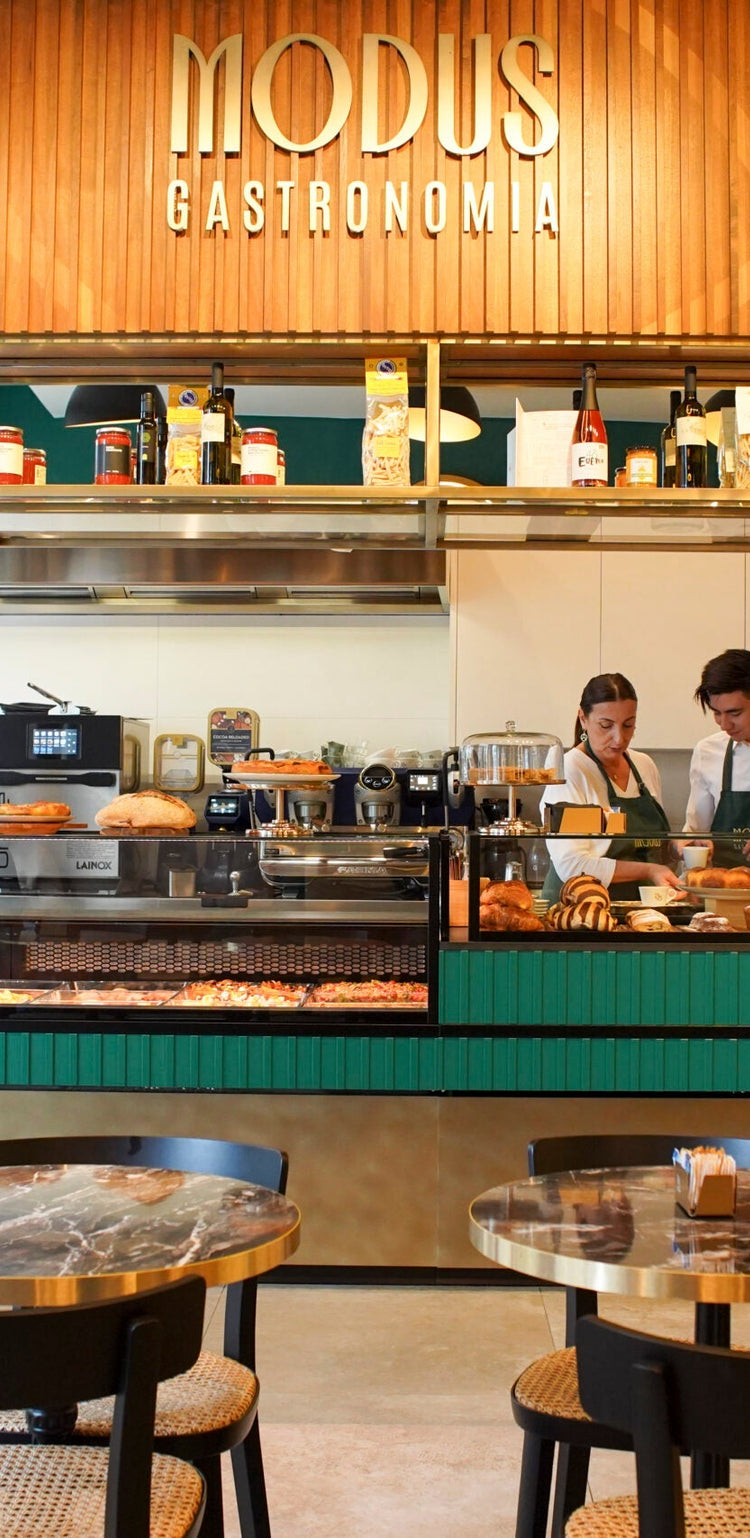
The ingredients for Cilento-style pizza can also be found at the Modus gastronomies on Corso Italia and Via Pirelli. Soon they will be available at your home, too.
Frequently asked questions
What is the difference between Cilento-style pizza and Neapolitan pizza?
The basic technique (long-fermentation dough, high-temperature baking) is similar. The difference lies in the ingredients: Cilento-style pizza uses Menaica anchovies, mozzarella nella mortella, and DOP/Slow Food products from the Cilento National Park; the "old-fashioned" version also uses whole wheat flour from native Cilento grains.
Are Modus pizzas suitable for celiacs?
No. Modus pizzas contain gluten and are not suitable for those with celiac disease. Anyone with gluten intolerances or allergies should avoid Modus pizzas.
Where can I find the ingredients for Cilento-style pizza?
The ingredients used in the pizzeria can be found at the Modus gastronomies on Corso Italia and Via Pirelli. Soon they will be available at your home, too.
How much does it cost to eat at Modus?
The menu is updated in our restaurants and on the website. For information on prices and reservations, please consult the individual locations at Via Andrea Maffei 12 and Corso Magenta 25 in Milan.