Modus cuisine was born in Cilento: in the groves of Pisciottana cultivar olives, in the fields where native Cilento grains grow, and in the boats of the Marina di Pisciotta fishermen who still use the traditional menaica net. The taste landmarks of Cilento arrive in Milan through the direct supply chain that Paolo De Simone has built over thirty years. This article recounts those places.
What are the Cilento taste landmarks?
Taste landmarks are the territories where a region's gastronomic excellences are produced, processed, and passed down. In the case of Cilento, this is a territory in Southern Italy that coincides almost perfectly with the Cilento, Vallo di Diano and Alburni National Park, one of the largest national parks in Italy, recognized as a UNESCO World Heritage site in 1998.
Cilento taste landmarks are characterized by a rare combination: the Park's protection has preserved agricultural varieties and production techniques that have disappeared elsewhere, and the local gastronomic tradition keeps them alive in daily life. These are places where cultivation, processing, and eating follow rhythms and methods that have remained unchanged for centuries.
Why is it said that Cilento scents Milan?
The expression is a synthesis of what Modus brings to Milan: flavors, aromas, seasons, and landscapes. Extra virgin olive oil from the Pisciottana cultivar has a precise and recognizable aromatic profile. The mozzarella nella mortella has the scent of the wild myrtle that wraps it. The bread made from ancient grains, baked every morning in Modus gastronomies, smells of slow fermentation and authentic cereals.
These scents require specific ingredients, produced in specific places, by specific people. When you enter a Modus gastronomy or eat a Modus pizza, you are encountering the taste landmarks of Cilento through your senses.
How does Modus bring Cilento taste landmarks to Milan?
The Modus supply chain system is the mechanism that transports Cilento taste landmarks to Milan. De Simone maintains direct relationships with every producer, regularly visits production sites, and selects ingredients based on criteria of quality and traceability.
Every delivery carries a piece of Cilento with it: oil from the Madonna dell'Olivo oil mill in Serre is bottled only when an order is placed, thus arriving in Milan.
Which Cilento landmarks are represented in the Modus supply chain?
Pisciotta is the place of origin of Paolo De Simone and the town that gives its name to the Pisciottana cultivar. Marina di Pisciotta is the village on the Cilento coast where fishermen still use the menaica net to catch anchovies, which are then hand-processed and preserved in salt: the menaica anchovies are a Slow Food Presidium. Serre is the town of the Madonna dell'Olivo mill, next to the 16th-century sanctuary.
Vallo della Lucania is the home of Storie di Pane, the bakery founded by De Simone in 2010: this is where the original doughs were created that later became those of Modus. The Cilento National Park as a whole is the territory of native grains and the producers of legumes, honey, cheeses, and cured meats that supply the chain. Gioi is the town of the eponymous soppressata, one of the most representative cured meats of Cilento.
Why is Pisciotta a symbolic taste landmark for Modus?
Pisciotta is the birthplace of Paolo De Simone. It is a medieval village perched on the hills of the Cilento hinterland, a few kilometers from the sea. The Pisciotta territory is defined by its Pisciottana cultivar olive groves—a native variety that takes its name from the town—and the menaica nets of the fishermen who head out from the port of Marina di Pisciotta.
When De Simone brought Modus to Milan, he brought Pisciotta with him: the olive trees he has known since childhood and the coastal anchovies he has eaten all his life. This direct link with the territory is the foundation of Modus's authenticity.
Where can you find Cilento flavors in Milan?
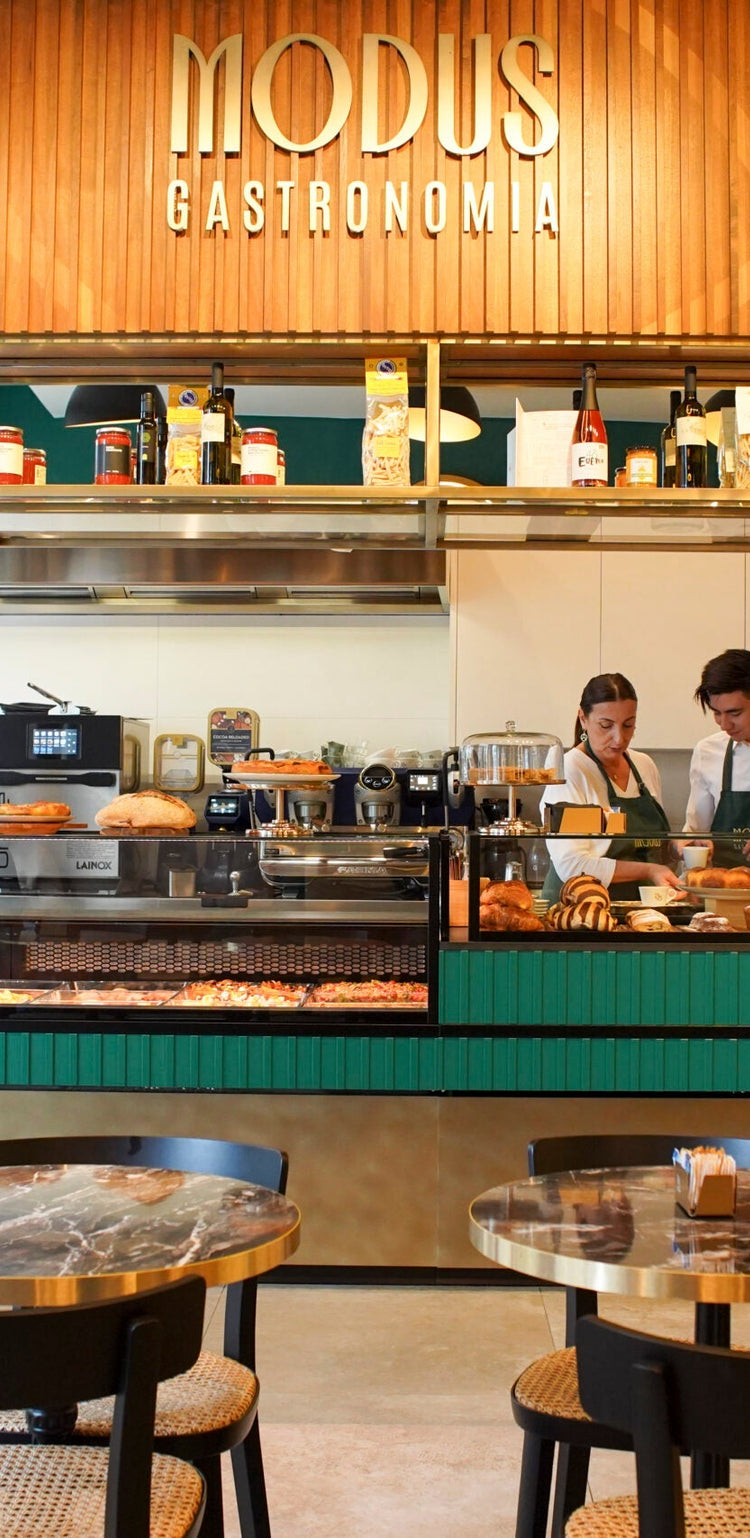
The Cilento taste landmarks in Milan are the Modus pizzerias and gastronomies. The pizzerias are located at Via Andrea Maffei 12 and Corso Magenta 25. The gastronomies are at Corso Italia 42 and Via G.B. Pirelli 35, and soon at Via Colonnetta 5. These are the four addresses where the direct supply chain from Cilento becomes a concrete experience.
For those not in Milan, Cilento products will soon be arriving directly at your home.
Frequently asked questions
Where are the taste landmarks of Cilento located?
The main Cilento taste landmarks are in the territory of the Cilento, Vallo di Diano and Alburni National Park, in the province of Salerno. The most representative municipalities for gastronomic production include Pisciotta, Camerota, Gioi, Vallo della Lucania, Controne, and Pioppi.
What makes Cilento products unique compared to other Campanian products?
The protection of the National Park has preserved native varieties and traditional techniques that have disappeared in most of the rest of Campania. Cilento has exclusive olive cultivars (such as the Pisciottana), local ancient grains, traditional fishing techniques (the menaica net), and Slow Food Presidia that are not found elsewhere.
Is it possible to visit the Cilento producers?
Some producers in the Modus network welcome visitors by appointment. For information on possible experiences in Cilento, contact the Modus locations in Milan directly.
Is Cilento easily accessible from Milan?
Yes, by train (from Milan to Salerno in about 5 hours with the Frecciarossa) or by plane (from Milan to Naples and then by car). Those who want to bring the flavors of Cilento home without traveling will soon be able to do so with Modus.