Aglianico is Campania's flagship grape variety. In fact, according to many oenologists, it is one of the most important red grape varieties in southern Italy, alongside Nerello Mascalese and Primitivo. One theory suggests that its name comes from the Greek Hellenikos, and that it was the Greeks who brought it to Campania between the 7th and 6th centuries BC. In Cilento, where the Phocaeans founded Elea (now Velia) around 535 BC, Aglianico has deep roots. The Cilento DOC recognizes this distinctiveness: the grapes grown in this area produce a wine different from Aglianico del Vulture (Basilicata) or Aglianico del Taburno (Benevento). It is more austere, saltier, and more closely linked to its coastal origins.
What is Aglianico del Cilento DOC?
Cilento DOC is the controlled and guaranteed designation for wines produced in the Cilento National Park area and neighboring municipalities in the province of Salerno. The designation includes white (Fiano-based), rosé, and red (Aglianico-based) wines. Aglianico del Cilento DOC must contain at least 85% Aglianico grapes; the remaining percentage can be made up with other authorized red grape varieties grown in the area.
Aglianico del Cilento vineyards are planted on the clay and limestone soils typical of the Cilento area. The production regulations allow them to be grown at altitudes of up to 450 meters (550 meters only in the municipality of Moio della Civitella). The influence of the Tyrrhenian Sea and the wind rising up the valleys moderates summer temperatures, ensuring a slow and even ripening of the grapes, which results in high natural acidity and balanced tannins in the finished wine.
What is the history of Aglianico in Campania?
Aglianico is one of Italy's oldest grape varieties. Its presence in Campania has been documented since classical antiquity: Pliny the Elder and Virgil both mention wines from southern Campania that many ampelographers believe were made from Aglianico.
After centuries of commercial obscurity, during which Aglianico del Cilento survived as a rustic wine for local consumption, the area experienced a revival in the 1990s and 2000s, led by producers such as Luigi Maffini of Castellabate, who has been bottling his wines since 1996 using a contemporary approach that put Cilento on Italy's wine map.

What are the characteristics of Aglianico del Cilento?
Aglianico del Cilento stands out from Aglianico del Vulture (Basilicata) for several distinctive features. It is generally fresher and saltier: its proximity to the sea and the temperature difference between day and night preserve its acidity and minerality, even in warm vintages. It tends to be less powerful and tannic than Aglianico del Vulture, but is equally long-lived: the best bottles can age in the cellar for 10 to 20 years.
On the nose, the dominant aromas are dark red fruits (sour cherry, blackberry, blueberry), spices (pepper, licorice, cloves), and, with age, notes of leather, tobacco, and dried fruit. On the palate, the lively acidity balances the tannins and ensures a smooth drinking experience despite the wine's structure. The finish is long and savory, with a return of fruit that is the hallmark of Aglianico from areas with a strong maritime influence.
Who makes the best Aglianico del Cilento?
Luigi Maffini of Castellabate is the area's benchmark. His Kleos Aglianico comes from two vineyards, one near the sea in Castellabate and the other on the hills of Giungano, which express two different sides of the same grape variety: the first is salty and vertical, the second darker and more spiced. The result is a complex wine from organic farming, aged in oak barriques and capable of evolving for up to twenty years. Kleos is labeled as a Paestum IGP.
Alfonso Rotolo works in Rutino, in the Cilento hinterland, where his family planted its first vineyard in 1938. His Le Ghiandaie, a Paestum IGP Aglianico, has a more immediate character than Kleos: clear red fruit, lively spices, and youthful tannins. It is a wine to open and drink right away, without waiting years. Rotolo also produces Fiano, and the combination of Aglianico and Fiano in the Modus selection covers the two signature grape varieties of Cilento.

What dishes pair well with Aglianico del Cilento?
Aglianico del Cilento is a structured wine with lively acidity: it needs dishes with a certain richness or savoriness to be at its best. Classic pairings from Cilento cuisine include soppressata di Gioi (a perfect match: the fat from the cured meat balances the tannins), pizza with ancient grain dough (the umami of the toasted crust and the savoriness of the toppings stand up well to the wine's acidity), red meat dishes, and aged cheeses such as Podolico caciocavallo.
With Maffini's Kleos Aglianico in particular, the years on its shoulders open up interesting pairings with porcini mushrooms, black truffle, wild boar ragout, and moderately complex dishes. It is a wine that evolves and becomes more elegant over time without losing its Cilento character.
Modus Cilento wines
Modus selects six labels from three Cilento wineries: Maffini, Rotolo, and Cobellis. Maffini and Rotolo work with Aglianico and Fiano, the two signature indigenous grape varieties of the area; Cobellis offers a Greco (Thumos) and a red made from field blends (Piscriddi). The selection covers a range of styles, from Rotolo's Le Ghiandaie, which is immediate and easy-drinking, to Maffini's Kleos Aglianico, which is best enjoyed after some cellar aging or opened right away with an impressive pizza.
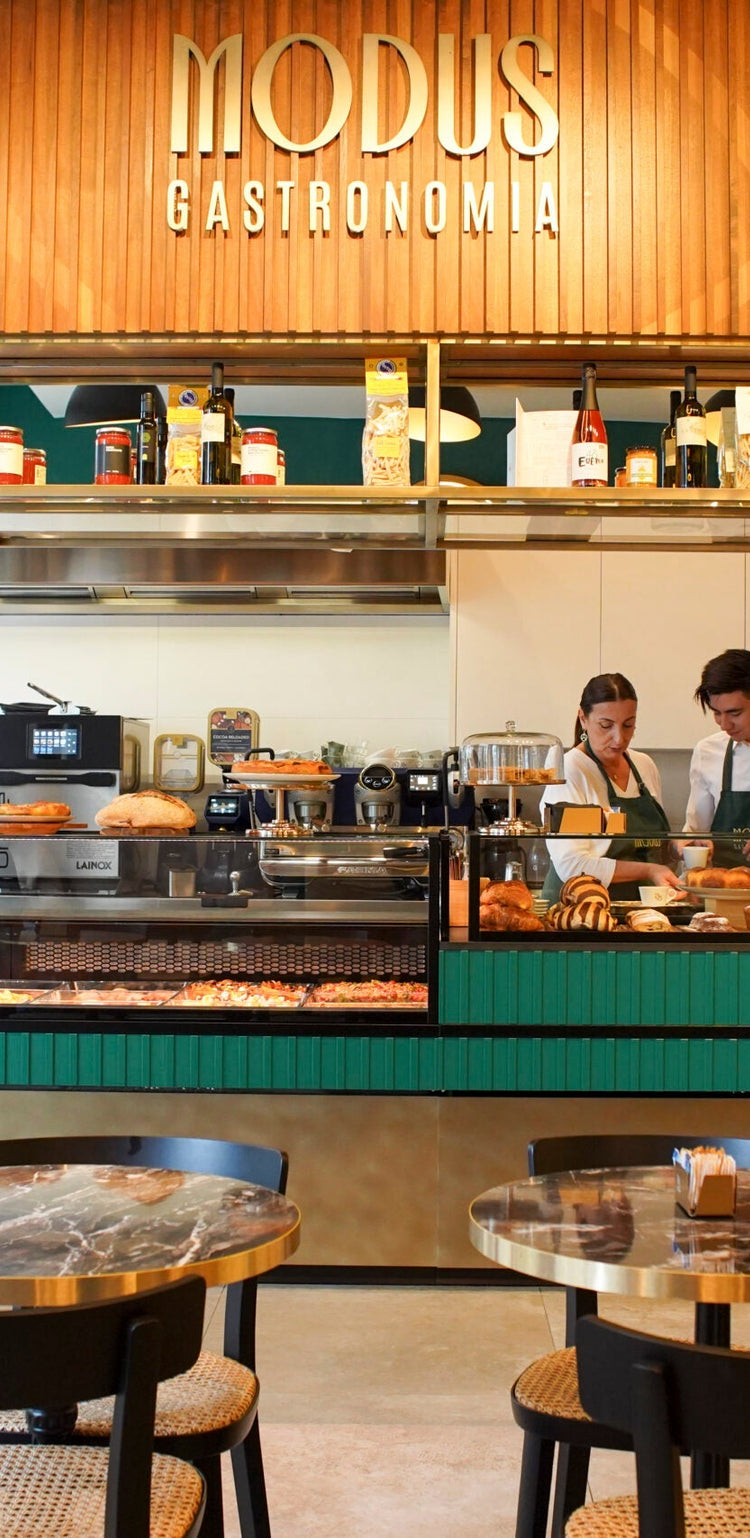
Modus wines are available at the gastronomies on Corso Italia and Via Pirelli. They will soon be available at your home too. For a complete Cilento evening with a white and a red, Maffini's Kratos and Kleos are the most harmonious pair in the Modus selection.
Frequently asked questions
Is Aglianico del Cilento different from Aglianico del Vulture?
Yes. Aglianico del Vulture (Basilicata) is produced on volcanic soils at higher altitudes: it tends to be more powerful, tannic, and structured, with a longevity of 30+ years. Aglianico del Cilento is produced on clay and limestone soils near the coast: it is fresher, saltier, and more immediate, while still retaining an important structure.
How long can Aglianico del Cilento be aged?
It depends on the producer and the vintage. Maffini's Kleos can evolve for up to twenty years. Rotolo's Le Ghiandaie is intended to be drunk within five years of the vintage. To help you decide, always check the production notes on the label.
Should Aglianico del Cilento be decanted?
For young bottles (1 to 3 years old), decanting for 30 to 60 minutes softens the tannins and opens up the aromas. For older bottles, decanting should be considered on a case-by-case basis: very old wines can be delicate and may not withstand prolonged decanting.
Where can I find Aglianico del Cilento in Milan?
At the Modus gastronomies on Corso Italia and Via Pirelli. The Modus selection includes labels from Maffini, Rotolo, and Cobellis.